


Overcoming Visual Noise: The Direct Link Between Physical Clutter and Cortisol Levels in Central NY Homes
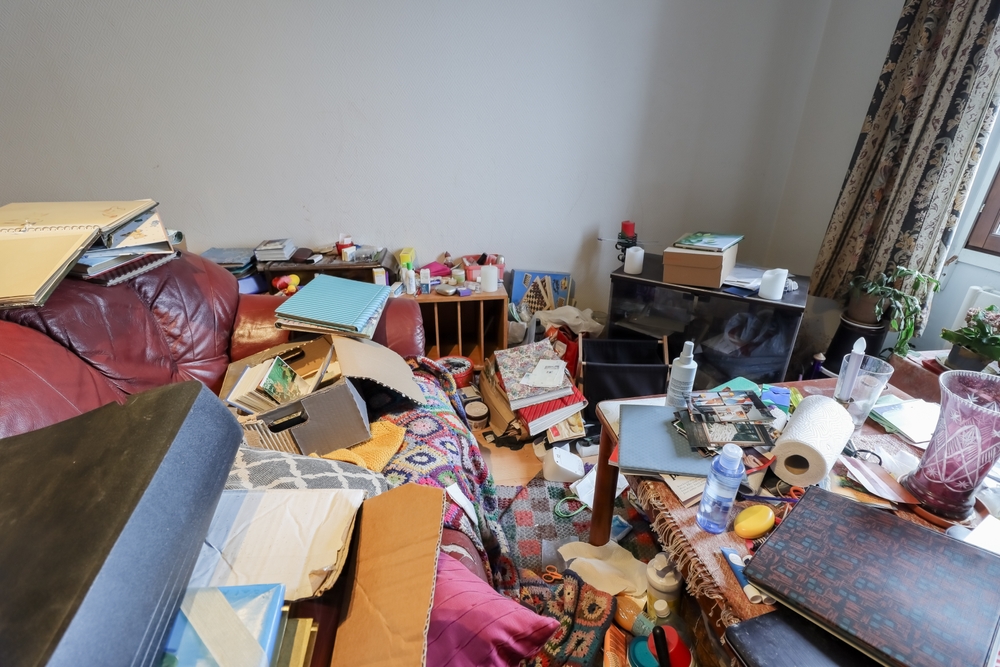
A Syracuse home can accumulate more than expected during a long Central New York winter. Boots collect near the door, seasonal equipment fills the garage, boxes migrate into the basement, and rooms that once felt comfortable can begin to feel visually busy.
That visual noise may affect more than the appearance of a home. Research has found an association between stressful perceptions of the home, including clutter and unfinished projects, and patterns of cortisol, a hormone involved in the body’s stress response.
Quick answer: Physical clutter does not automatically cause high cortisol, and research does not establish a simple cause-and-effect relationship. However, a study of dual-income households found that women who described their homes using more stressful, clutter-related language showed flatter daily cortisol patterns and worsening mood across the day. Reducing excess belongings can therefore be one practical way to create a home environment that feels easier to manage.
What local readers should know
- Clutter can act as persistent visual information, continually reminding residents of unfinished decisions, cleaning, sorting, or household tasks.
- Research has identified an association between stressful home descriptions and altered daily cortisol patterns, particularly among women in the study.
- Syracuse winters can keep residents and seasonal belongings indoors for extended periods, making usable interior space especially valuable.
- Basements, garages, spare rooms, entryways, and attics are common places where years of possessions can accumulate.
- Removing unwanted items is different from organizing them. Sometimes the first step toward a manageable room is simply reducing the volume of belongings.
Why Does Physical Clutter Matter to Stress Levels?
Physical clutter may contribute to a home feeling stressful because visible belongings can represent unfinished work, competing demands, and decisions that still need attention. Research supports an association between perceptions of a stressful home and daily cortisol patterns, although it does not prove that clutter alone directly causes elevated cortisol.
A 2010 study by researchers Darby Saxbe and Rena Repetti examined 60 dual-income spouses and analyzed how participants described their homes. Women with higher “stressful home” scores, based partly on language about clutter and unfinished spaces, had flatter cortisol slopes across the day and increasingly depressed mood. Women whose descriptions reflected more restorative homes showed steeper cortisol declines and improving mood. The study controlled for marital satisfaction and neuroticism.
That distinction matters. Cortisol normally follows a daily rhythm, so the issue is more complex than saying “clutter raises cortisol.” The research instead suggests that how people experience their home environment can be associated with physiological patterns related to stress.
Why Does Clutter Matter in Central New York Homes?
Clutter can become especially noticeable in Central New York because residents regularly rotate clothing, recreation equipment, tools, decorations, and weather-related gear through four distinct seasons. A Syracuse household may need space for snow shovels and winter boots one month, then lawn equipment, bicycles, or outdoor furniture as temperatures change.
National Weather Service records illustrate how wide those seasonal swings can be. During winter 2025-2026, Syracuse recorded temperatures as low as -9°F, while summer 2026 reached 98°F.
Those conditions encourage households to keep substantial amounts of seasonal property indoors or under cover.
In areas such as Eastwood, Strathmore, Sedgwick, and the University neighborhood, storage layouts also vary significantly from property to property. Residents throughout Onondaga County may rely on basements, garages, attics, closets, sheds, or spare rooms to absorb belongings that are not currently being used.
Expert Clutter Removal Service helps local residents address the removal side of that problem. We focus on helping clear unwanted belongings so homeowners can reclaim space instead of simply shifting excess items from one part of the property to another.
What Does Research Actually Say About Clutter and Cortisol?
Research suggests an association between stressful home environments and cortisol patterns, but it does not establish that every cluttered room directly increases a person’s cortisol level. That is an important limitation when discussing the connection between clutter and stress.
The Saxbe and Repetti home-tour study involved a relatively small group of dual-income households. Its strongest reported cortisol finding involved wives who described their homes as more stressful.
Related research provides additional context. In another naturalistic household study, researchers found that both husbands and wives who spent a greater proportion of their time at home doing housework had higher evening cortisol and weaker afternoon-to-evening recovery.
These findings should not be interpreted as a medical diagnosis or as evidence that removing clutter treats a hormonal or mental health condition. They do support a practical idea: the demands people experience inside their homes can be connected with measurable stress-response patterns.
How Can Visual Noise Affect Daily Life at Home?
Visual noise can make a home feel as though there is always another task waiting, even when a resident is trying to relax. Piles, crowded surfaces, unused furniture, boxes, and partially completed projects can all compete for attention.
For Syracuse residents spending more time indoors during cold or wet stretches, that environment can be difficult to ignore. A crowded basement may prevent someone from creating a usable exercise area. A packed spare bedroom can eliminate space for guests. An overloaded garage can leave a vehicle outside during winter weather.
The impact is not necessarily dramatic. Often, clutter creates dozens of small inconveniences. Finding something takes longer. Cleaning requires moving objects first. Walking paths become narrower. Putting away new purchases becomes harder because storage areas are already full.
Reducing those obstacles can make everyday routines simpler.
What Are the Warning Signs That Clutter Has Become a Larger Problem?
Clutter may require more than routine organizing when possessions begin interfering with how rooms, storage areas, or access points are normally used.
Watch for signs such as:
- Boxes or belongings repeatedly blocking normal walking paths.
- A garage that can no longer accommodate the vehicle or equipment it was intended to hold.
- Basement areas becoming difficult to inspect, clean, or access.
- Spare bedrooms turning into permanent storage rooms.
- Countertops, tables, or other working surfaces remaining covered most of the time.
- Seasonal items staying piled in living areas because storage spaces are already full.
- Large unwanted furniture or appliances remaining because they are difficult to move.
- Organizing efforts repeatedly failing because there is simply too much material for the available space.
One crowded closet does not necessarily indicate a serious problem. The more useful question is whether belongings are preventing the household from comfortably using its available space.
When Should Syracuse Residents Call a Clutter Removal Professional?
Professional clutter removal becomes useful when the amount, weight, volume, or location of unwanted material makes clearing it independently difficult or impractical. Residents can often sort papers, clothing, and small household items themselves, while larger cleanouts may require additional labor and removal capacity.
A basement full of old belongings, for example, presents a different challenge than a crowded kitchen drawer. Heavy furniture may need to travel up stairs. Garage cleanouts can involve bulky items that do not fit into normal household trash. Estate transitions, moves, renovations, and major downsizing projects can also produce more material than a homeowner can reasonably handle alone.
Safety should remain the priority. Residents should not attempt to move objects that are too heavy to handle safely or disturb materials that may require specialized hazardous-material procedures.
What Commonly Causes Clutter to Build Up in Central NY?
Clutter in Central NY homes commonly develops through gradual accumulation rather than a single event. Seasonal storage, household transitions, delayed disposal, and limited storage capacity can combine until previously usable areas become difficult to manage.
Seasonal rotation: Winter coats, boots, holiday decorations, snow equipment, gardening tools, outdoor furniture, and recreation gear all compete for storage.
Life transitions: Moving, downsizing, combining households, welcoming children, handling an estate, or helping an older relative can suddenly increase the number of possessions under one roof.
Deferred decisions: Items placed in a basement or garage “for now” can remain there for years.
Large unwanted objects: Furniture, appliances, mattresses, and other bulky belongings are easy to postpone dealing with because removal requires more effort.
Limited usable storage: Older properties around Syracuse and neighboring communities do not always have storage configurations suited to modern household inventories.
How Can Homeowners Prevent Clutter From Returning?
Homeowners can prevent clutter from returning by controlling what enters storage areas and routinely removing belongings that no longer serve a purpose. In Central New York, seasonal transitions provide convenient times to review what is actually being used.
Consider checking winter equipment as spring arrives and reviewing summer or yard items before cold weather returns. If something was not used during its relevant season, decide whether keeping it another year makes sense.
Avoid treating every open basement corner as permanent storage. Give categories defined limits, such as one shelving area for holiday decorations or one section for outdoor equipment.
Most importantly, separate organizing from removal. Storage bins and shelving can improve useful storage, but purchasing more containers does not reduce the amount of property in the house.
What Results Can Residents Expect After Removing Excess Clutter?
Removing excess clutter can create more usable space, clearer surfaces, easier access, and a home that is simpler to clean and navigate. Those are realistic physical outcomes, while individual emotional or stress-related responses will naturally vary.
A cleared garage may once again hold a vehicle. A spare room can become functional. Basement equipment and storage areas can become easier to reach. Entryways can accommodate the boots, coats, and wet-weather gear common during an Onondaga County winter.
Clutter removal should not be presented as a treatment for stress, anxiety, cortisol problems, or other health conditions. Its practical value is straightforward: fewer unwanted belongings can mean fewer physical obstacles and fewer items competing for space and attention.
What Mistakes Make Decluttering Harder?
The biggest decluttering mistakes usually involve reorganizing excess belongings instead of reducing them, taking on too much at once, or postponing difficult removal decisions.
Mistake: Buying storage containers first.
Consequence: Unwanted belongings become neatly packaged clutter.
Better approach: Decide what is staying before purchasing additional storage.
Mistake: Emptying an entire house at once.
Consequence: The project can become overwhelming and leave several rooms unusable.
Better approach: Work by room, category, or clearly defined zone.
Mistake: Moving everything into the basement or garage.
Consequence: The living area improves temporarily while another part of the property becomes unusable.
Better approach: Separate items intended for actual removal from items worth storing.
Mistake: Waiting for the perfect weekend.
Consequence: A manageable project can continue growing.
Better approach: Begin with one high-impact area or arrange help when volume is the primary obstacle.
What Is a Common Clutter Scenario in Syracuse?
A common Syracuse scenario is a basement or garage that slowly becomes the destination for anything the household does not know where to put. Holiday decorations arrive first, followed by children’s belongings, old furniture, renovation leftovers, unused exercise equipment, boxes from a move, and seasonal outdoor items.
Eventually, accessing one needed object requires moving several others.
The useful first question is not, “How do I organize all of this?” It is, “How much of this still needs to stay?”
Once unwanted material is removed, organizing what remains becomes a much smaller project.
What Service Solutions Can Help Reclaim the Space?
Clutter removal services can help when unwanted household contents have become too bulky, numerous, or difficult for residents to remove efficiently themselves. Professional help can be particularly useful for larger room cleanouts, basement and garage clearing, downsizing, or situations involving heavy household items.
We can help local residents address the physical removal stage so the space can move toward its next use.
Is DIY Decluttering or Professional Removal the Better Fit?
DIY decluttering works well for manageable quantities of lightweight belongings, while professional removal can make more sense when volume, stairs, bulky objects, physical limitations, or time constraints become significant.
For a single closet or several boxes, a homeowner may need little more than a sorting plan. For a packed basement, garage, multiple rooms, or major household transition, the logistics become more demanding.
A combined approach can also work well. Residents can make personal decisions about what stays, then bring in removal help for the unwanted material.
What Areas Around Syracuse Can Benefit From Clutter Removal?
Clutter removal can be useful for households throughout Syracuse and surrounding Onondaga County communities, including nearby areas such as DeWitt, Liverpool, and Cicero. Storage challenges differ by property, but the goal remains the same: restoring space that unwanted belongings have gradually taken over.
What Can Happen If Household Clutter Is Ignored?
Ignoring significant clutter can gradually reduce usable space and make normal household tasks more difficult. Cleaning, accessing stored equipment, preparing for repairs, moving furniture, and reaching portions of a basement or garage can all require more effort as accumulation increases.
During a Central New York winter, losing garage or entryway space can be especially inconvenient because vehicles, snow equipment, coats, boots, and seasonal supplies already place additional demands on storage areas.
Removing unnecessary belongings earlier can prevent a small storage problem from becoming a much larger cleanout.
FAQ
Does clutter actually increase cortisol?
Research shows an association between stressful perceptions of the home and altered cortisol patterns, but it does not prove that physical clutter directly increases cortisol in every person. A published study found that women who described their homes as more cluttered and unfinished had flatter daily cortisol slopes.
Why can clutter feel worse during a Syracuse winter?
Clutter can feel more noticeable during a Syracuse winter because residents may spend more time indoors while coats, boots, snow equipment, holiday items, and other seasonal belongings occupy additional space. Cold conditions also make garages and clear entryways particularly useful, increasing the practical cost of losing those areas to storage.
Can decluttering lower my cortisol level?
Decluttering should not be expected or advertised to lower an individual’s cortisol level. Research supports associations between stressful home environments and cortisol patterns, not a guaranteed hormonal effect from removing possessions. Decluttering can, however, reduce physical obstacles and create a home environment that some residents find easier to manage.
Where does clutter commonly accumulate in Central NY homes?
Basements, garages, spare bedrooms, closets, attics, sheds, and entry areas are common accumulation points in Central NY homes. Seasonal belongings can increase storage pressure because households may keep winter equipment, warm-weather recreation items, decorations, tools, and outdoor furniture on the property at different times of year.
When should I get professional clutter removal in Syracuse?
Professional clutter removal may be appropriate when unwanted belongings occupy entire rooms, involve heavy or bulky objects, block access, or exceed what household trash and personal vehicles can reasonably handle. Large basement and garage cleanouts, downsizing projects, and household transitions are situations where additional removal help can simplify the physical work.
Should I organize my Syracuse home before scheduling clutter removal?
You do not necessarily need to fully organize first, but deciding what you want to keep can make removal more straightforward. Separate personal documents, valuables, sentimental possessions, and definite keepers when practical. The remaining unwanted material can then be addressed without turning the process into a complete home-organization project.
Can removing clutter make a small Onondaga County home feel larger?
Removing excess belongings can increase usable floor, storage, and surface space without changing the home’s actual square footage. Clearing an overloaded spare room, basement, garage, or entryway may restore functions that were previously lost, which can make the property feel considerably more workable.
Is clutter removal the same as treating hoarding disorder?
No. Clutter removal is a physical property service and should not be presented as treatment for hoarding disorder or another mental health condition. When accumulation is connected with significant emotional distress or a diagnosed condition, appropriate healthcare support may be important alongside any practical decisions about the property.
Reclaim a More Usable Central New York Home
Clutter can quietly change how a home functions and how residents experience their surroundings. Research does not prove that every pile of belongings raises cortisol, but it does show meaningful connections between stressful home environments and physiological stress patterns.
For Syracuse-area households, reducing unwanted belongings can restore something immediately measurable: usable space.
Create More Room for the Life You Actually Live
We help local residents tackle the physical burden of unwanted clutter so rooms, garages, and storage areas can become useful again.