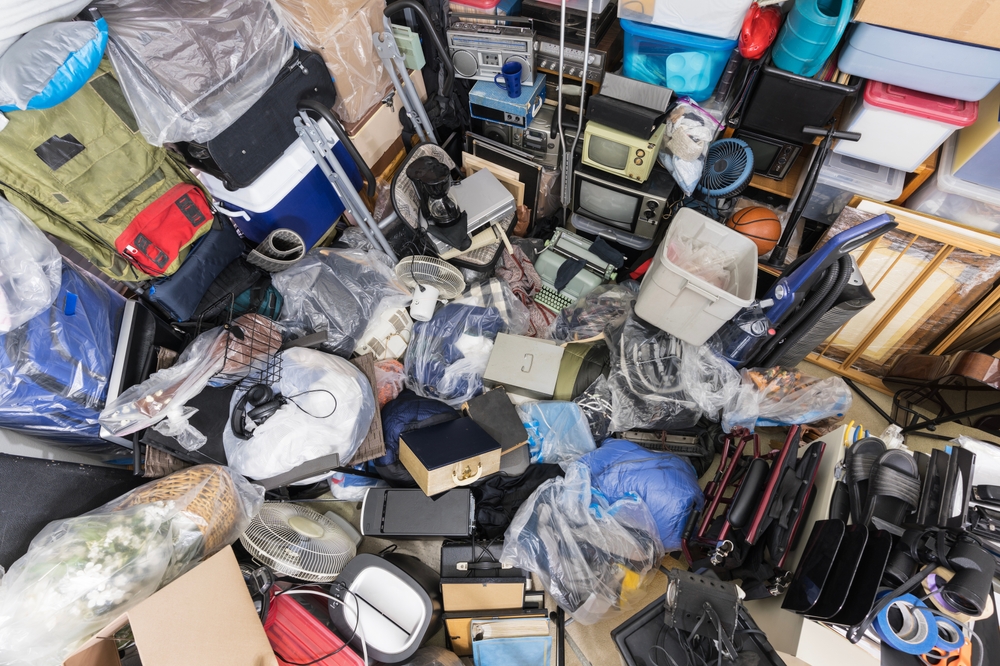


Overcoming Visual Noise: The Direct Link Between Physical Clutter and Cortisol Levels in Central NY Homes
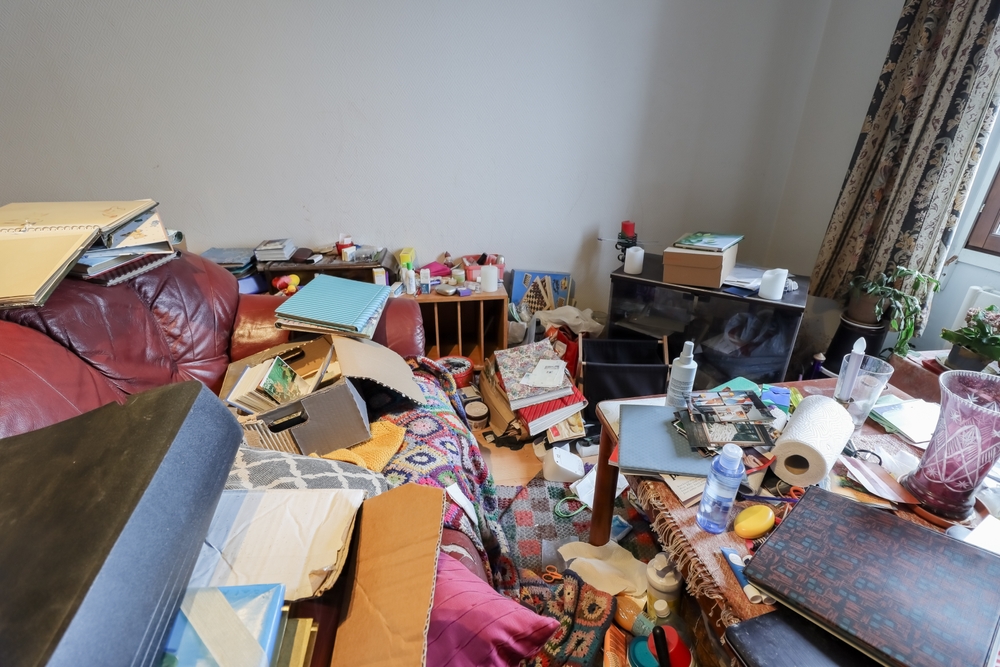
A Syracuse home can accumulate more than expected during a long Central New York winter. Boots collect near the door, seasonal equipment fills the garage, boxes migrate into the basement, and rooms that once felt comfortable can begin to feel visually busy.

That visual noise may affect more than the appearance of a home. Research has found an association between stressful perceptions of the home, including clutter and unfinished projects, and patterns of cortisol, a hormone involved in the body’s stress response.

Quick answer: Physical clutter does not automatically cause high cortisol, and research does not establish a simple cause-and-effect relationship. However, a study of dual-income households found that women who described their homes using more stressful, clutter-related language showed flatter daily cortisol patterns and worsening mood across the day. Reducing excess belongings can therefore be one practical way to create a home environment that feels easier to manage.

What local readers should know

  • Clutter can act as persistent visual information, continually reminding residents of unfinished decisions, cleaning, sorting, or household tasks.
  • Research has identified an association between stressful home descriptions and altered daily cortisol patterns, particularly among women in the study.
  • Syracuse winters can keep residents and seasonal belongings indoors for extended periods, making usable interior space especially valuable.
  • Basements, garages, spare rooms, entryways, and attics are common places where years of possessions can accumulate.
  • Removing unwanted items is different from organizing them. Sometimes the first step toward a manageable room is simply reducing the volume of belongings.

Why Does Physical Clutter Matter to Stress Levels?

Physical clutter may contribute to a home feeling stressful because visible belongings can represent unfinished work, competing demands, and decisions that still need attention. Research supports an association between perceptions of a stressful home and daily cortisol patterns, although it does not prove that clutter alone directly causes elevated cortisol.

A 2010 study by researchers Darby Saxbe and Rena Repetti examined 60 dual-income spouses and analyzed how participants described their homes. Women with higher “stressful home” scores, based partly on language about clutter and unfinished spaces, had flatter cortisol slopes across the day and increasingly depressed mood. Women whose descriptions reflected more restorative homes showed steeper cortisol declines and improving mood. The study controlled for marital satisfaction and neuroticism.

That distinction matters. Cortisol normally follows a daily rhythm, so the issue is more complex than saying “clutter raises cortisol.” The research instead suggests that how people experience their home environment can be associated with physiological patterns related to stress.

Why Does Clutter Matter in Central New York Homes?

Clutter can become especially noticeable in Central New York because residents regularly rotate clothing, recreation equipment, tools, decorations, and weather-related gear through four distinct seasons. A Syracuse household may need space for snow shovels and winter boots one month, then lawn equipment, bicycles, or outdoor furniture as temperatures change.

National Weather Service records illustrate how wide those seasonal swings can be. During winter 2025-2026, Syracuse recorded temperatures as low as -9°F, while summer 2026 reached 98°F.

Those conditions encourage households to keep substantial amounts of seasonal property indoors or under cover.

In areas such as Eastwood, Strathmore, Sedgwick, and the University neighborhood, storage layouts also vary significantly from property to property. Residents throughout Onondaga County may rely on basements, garages, attics, closets, sheds, or spare rooms to absorb belongings that are not currently being used.

Expert Clutter Removal Service helps local residents address the removal side of that problem. We focus on helping clear unwanted belongings so homeowners can reclaim space instead of simply shifting excess items from one part of the property to another.

What Does Research Actually Say About Clutter and Cortisol?

Research suggests an association between stressful home environments and cortisol patterns, but it does not establish that every cluttered room directly increases a person’s cortisol level. That is an important limitation when discussing the connection between clutter and stress.

The Saxbe and Repetti home-tour study involved a relatively small group of dual-income households. Its strongest reported cortisol finding involved wives who described their homes as more stressful.

Related research provides additional context. In another naturalistic household study, researchers found that both husbands and wives who spent a greater proportion of their time at home doing housework had higher evening cortisol and weaker afternoon-to-evening recovery.

These findings should not be interpreted as a medical diagnosis or as evidence that removing clutter treats a hormonal or mental health condition. They do support a practical idea: the demands people experience inside their homes can be connected with measurable stress-response patterns.

How Can Visual Noise Affect Daily Life at Home?

Visual noise can make a home feel as though there is always another task waiting, even when a resident is trying to relax. Piles, crowded surfaces, unused furniture, boxes, and partially completed projects can all compete for attention.

For Syracuse residents spending more time indoors during cold or wet stretches, that environment can be difficult to ignore. A crowded basement may prevent someone from creating a usable exercise area. A packed spare bedroom can eliminate space for guests. An overloaded garage can leave a vehicle outside during winter weather.

The impact is not necessarily dramatic. Often, clutter creates dozens of small inconveniences. Finding something takes longer. Cleaning requires moving objects first. Walking paths become narrower. Putting away new purchases becomes harder because storage areas are already full.

Reducing those obstacles can make everyday routines simpler.

What Are the Warning Signs That Clutter Has Become a Larger Problem?

Clutter may require more than routine organizing when possessions begin interfering with how rooms, storage areas, or access points are normally used.

Watch for signs such as:

  • Boxes or belongings repeatedly blocking normal walking paths.
  • A garage that can no longer accommodate the vehicle or equipment it was intended to hold.
  • Basement areas becoming difficult to inspect, clean, or access.
  • Spare bedrooms turning into permanent storage rooms.
  • Countertops, tables, or other working surfaces remaining covered most of the time.
  • Seasonal items staying piled in living areas because storage spaces are already full.
  • Large unwanted furniture or appliances remaining because they are difficult to move.
  • Organizing efforts repeatedly failing because there is simply too much material for the available space.

One crowded closet does not necessarily indicate a serious problem. The more useful question is whether belongings are preventing the household from comfortably using its available space.

When Should Syracuse Residents Call a Clutter Removal Professional?

Professional clutter removal becomes useful when the amount, weight, volume, or location of unwanted material makes clearing it independently difficult or impractical. Residents can often sort papers, clothing, and small household items themselves, while larger cleanouts may require additional labor and removal capacity.

A basement full of old belongings, for example, presents a different challenge than a crowded kitchen drawer. Heavy furniture may need to travel up stairs. Garage cleanouts can involve bulky items that do not fit into normal household trash. Estate transitions, moves, renovations, and major downsizing projects can also produce more material than a homeowner can reasonably handle alone.

Safety should remain the priority. Residents should not attempt to move objects that are too heavy to handle safely or disturb materials that may require specialized hazardous-material procedures.

What Commonly Causes Clutter to Build Up in Central NY?

Clutter in Central NY homes commonly develops through gradual accumulation rather than a single event. Seasonal storage, household transitions, delayed disposal, and limited storage capacity can combine until previously usable areas become difficult to manage.

Seasonal rotation: Winter coats, boots, holiday decorations, snow equipment, gardening tools, outdoor furniture, and recreation gear all compete for storage.

Life transitions: Moving, downsizing, combining households, welcoming children, handling an estate, or helping an older relative can suddenly increase the number of possessions under one roof.

Deferred decisions: Items placed in a basement or garage “for now” can remain there for years.

Large unwanted objects: Furniture, appliances, mattresses, and other bulky belongings are easy to postpone dealing with because removal requires more effort.

Limited usable storage: Older properties around Syracuse and neighboring communities do not always have storage configurations suited to modern household inventories.

How Can Homeowners Prevent Clutter From Returning?

Homeowners can prevent clutter from returning by controlling what enters storage areas and routinely removing belongings that no longer serve a purpose. In Central New York, seasonal transitions provide convenient times to review what is actually being used.

Consider checking winter equipment as spring arrives and reviewing summer or yard items before cold weather returns. If something was not used during its relevant season, decide whether keeping it another year makes sense.

Avoid treating every open basement corner as permanent storage. Give categories defined limits, such as one shelving area for holiday decorations or one section for outdoor equipment.

Most importantly, separate organizing from removal. Storage bins and shelving can improve useful storage, but purchasing more containers does not reduce the amount of property in the house.

What Results Can Residents Expect After Removing Excess Clutter?

Removing excess clutter can create more usable space, clearer surfaces, easier access, and a home that is simpler to clean and navigate. Those are realistic physical outcomes, while individual emotional or stress-related responses will naturally vary.

A cleared garage may once again hold a vehicle. A spare room can become functional. Basement equipment and storage areas can become easier to reach. Entryways can accommodate the boots, coats, and wet-weather gear common during an Onondaga County winter.

Clutter removal should not be presented as a treatment for stress, anxiety, cortisol problems, or other health conditions. Its practical value is straightforward: fewer unwanted belongings can mean fewer physical obstacles and fewer items competing for space and attention.

What Mistakes Make Decluttering Harder?

The biggest decluttering mistakes usually involve reorganizing excess belongings instead of reducing them, taking on too much at once, or postponing difficult removal decisions.

Mistake: Buying storage containers first.
Consequence: Unwanted belongings become neatly packaged clutter.
Better approach: Decide what is staying before purchasing additional storage.

Mistake: Emptying an entire house at once.
Consequence: The project can become overwhelming and leave several rooms unusable.
Better approach: Work by room, category, or clearly defined zone.

Mistake: Moving everything into the basement or garage.
Consequence: The living area improves temporarily while another part of the property becomes unusable.
Better approach: Separate items intended for actual removal from items worth storing.

Mistake: Waiting for the perfect weekend.
Consequence: A manageable project can continue growing.
Better approach: Begin with one high-impact area or arrange help when volume is the primary obstacle.

What Is a Common Clutter Scenario in Syracuse?

A common Syracuse scenario is a basement or garage that slowly becomes the destination for anything the household does not know where to put. Holiday decorations arrive first, followed by children’s belongings, old furniture, renovation leftovers, unused exercise equipment, boxes from a move, and seasonal outdoor items.

Eventually, accessing one needed object requires moving several others.

The useful first question is not, “How do I organize all of this?” It is, “How much of this still needs to stay?”

Once unwanted material is removed, organizing what remains becomes a much smaller project.

What Service Solutions Can Help Reclaim the Space?

Clutter removal services can help when unwanted household contents have become too bulky, numerous, or difficult for residents to remove efficiently themselves. Professional help can be particularly useful for larger room cleanouts, basement and garage clearing, downsizing, or situations involving heavy household items.

We can help local residents address the physical removal stage so the space can move toward its next use.

Is DIY Decluttering or Professional Removal the Better Fit?

DIY decluttering works well for manageable quantities of lightweight belongings, while professional removal can make more sense when volume, stairs, bulky objects, physical limitations, or time constraints become significant.

For a single closet or several boxes, a homeowner may need little more than a sorting plan. For a packed basement, garage, multiple rooms, or major household transition, the logistics become more demanding.

A combined approach can also work well. Residents can make personal decisions about what stays, then bring in removal help for the unwanted material.

What Areas Around Syracuse Can Benefit From Clutter Removal?

Clutter removal can be useful for households throughout Syracuse and surrounding Onondaga County communities, including nearby areas such as DeWitt, Liverpool, and Cicero. Storage challenges differ by property, but the goal remains the same: restoring space that unwanted belongings have gradually taken over.

What Can Happen If Household Clutter Is Ignored?

Ignoring significant clutter can gradually reduce usable space and make normal household tasks more difficult. Cleaning, accessing stored equipment, preparing for repairs, moving furniture, and reaching portions of a basement or garage can all require more effort as accumulation increases.

During a Central New York winter, losing garage or entryway space can be especially inconvenient because vehicles, snow equipment, coats, boots, and seasonal supplies already place additional demands on storage areas.

Removing unnecessary belongings earlier can prevent a small storage problem from becoming a much larger cleanout.

FAQ

Does clutter actually increase cortisol?

Research shows an association between stressful perceptions of the home and altered cortisol patterns, but it does not prove that physical clutter directly increases cortisol in every person. A published study found that women who described their homes as more cluttered and unfinished had flatter daily cortisol slopes.

Why can clutter feel worse during a Syracuse winter?

Clutter can feel more noticeable during a Syracuse winter because residents may spend more time indoors while coats, boots, snow equipment, holiday items, and other seasonal belongings occupy additional space. Cold conditions also make garages and clear entryways particularly useful, increasing the practical cost of losing those areas to storage.

Can decluttering lower my cortisol level?

Decluttering should not be expected or advertised to lower an individual’s cortisol level. Research supports associations between stressful home environments and cortisol patterns, not a guaranteed hormonal effect from removing possessions. Decluttering can, however, reduce physical obstacles and create a home environment that some residents find easier to manage.

Where does clutter commonly accumulate in Central NY homes?

Basements, garages, spare bedrooms, closets, attics, sheds, and entry areas are common accumulation points in Central NY homes. Seasonal belongings can increase storage pressure because households may keep winter equipment, warm-weather recreation items, decorations, tools, and outdoor furniture on the property at different times of year.

When should I get professional clutter removal in Syracuse?

Professional clutter removal may be appropriate when unwanted belongings occupy entire rooms, involve heavy or bulky objects, block access, or exceed what household trash and personal vehicles can reasonably handle. Large basement and garage cleanouts, downsizing projects, and household transitions are situations where additional removal help can simplify the physical work.

Should I organize my Syracuse home before scheduling clutter removal?

You do not necessarily need to fully organize first, but deciding what you want to keep can make removal more straightforward. Separate personal documents, valuables, sentimental possessions, and definite keepers when practical. The remaining unwanted material can then be addressed without turning the process into a complete home-organization project.

Can removing clutter make a small Onondaga County home feel larger?

Removing excess belongings can increase usable floor, storage, and surface space without changing the home’s actual square footage. Clearing an overloaded spare room, basement, garage, or entryway may restore functions that were previously lost, which can make the property feel considerably more workable.

Is clutter removal the same as treating hoarding disorder?

No. Clutter removal is a physical property service and should not be presented as treatment for hoarding disorder or another mental health condition. When accumulation is connected with significant emotional distress or a diagnosed condition, appropriate healthcare support may be important alongside any practical decisions about the property.

Reclaim a More Usable Central New York Home

Clutter can quietly change how a home functions and how residents experience their surroundings. Research does not prove that every pile of belongings raises cortisol, but it does show meaningful connections between stressful home environments and physiological stress patterns.

For Syracuse-area households, reducing unwanted belongings can restore something immediately measurable: usable space.

Create More Room for the Life You Actually Live

We help local residents tackle the physical burden of unwanted clutter so rooms, garages, and storage areas can become useful again.
Fast-Track Landlord Cleanouts: Removing Tenant Debris & Trash Out of Shared Rental Basements

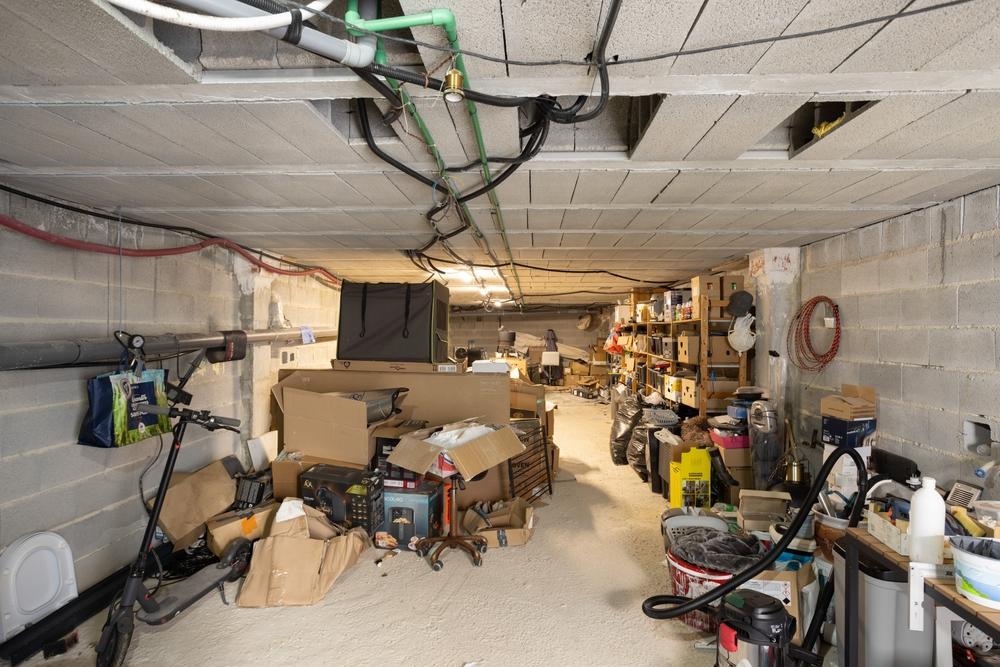
Shared rental basements can become a major cleanup problem when former tenants leave behind furniture, bagged trash, broken household items, boxes, and unidentified belongings. For landlords in Newark, NY, the challenge is not simply getting everything outside. The basement may still be used by current tenants, and narrow stairs, limited access, utilities, and mixed ownership of stored items can make the cleanout more complicated.

Quick answer: A fast-track landlord basement cleanout involves identifying what can be removed, separating tenant belongings that should remain, creating a safe path through shared areas, and hauling approved debris out without unnecessarily disrupting the property. Landlords should also consider lease obligations and applicable New York requirements before disposing of property that may still belong to a tenant.

What Newark landlords should know

Why Do Shared Rental Basement Cleanouts Require Extra Planning?

Shared rental basement cleanouts require extra planning because trash, abandoned-looking items, active tenant storage, building equipment, and common-use areas can all occupy the same space. Before removal begins, landlords need a clear understanding of what is being discarded and what must stay so a fast cleanup does not create a new tenant or property-management problem.

This is particularly relevant around Newark, where landlords may manage older houses converted into rentals, duplexes, multifamily properties, and buildings with traditional below-grade basements. Access can involve steep interior stairs or narrow doorways that make bulky furniture difficult to remove.

Landlords also need to think beyond visible clutter. A basement may contain electrical panels, plumbing shutoffs, heating equipment, laundry connections, or other building systems that should remain accessible.

Expert Clutter Removal Service helps property owners address unwanted clutter and debris. After the landlord has determined what is authorized for removal, we can focus on the physical cleanout and hauling process.

What Do We Observe During Local Basement Cleanouts?

Our field approach to basement cleanouts focuses on access, item separation, removal difficulty, and the condition of the path used to carry debris out of the property. These are professional cleanup considerations rather than published statistics, and the exact challenges vary significantly from one Newark rental property to another.

Basements can turn into collection points because tenants have more room to put something aside downstairs than they do inside an apartment. A few boxes or unwanted chairs can gradually become a larger accumulation.

For landlords, the problem often becomes apparent during turnover, an inspection, maintenance work, or preparation for a new tenant. By that point, sorting and hauling may require substantially more effort than taking out ordinary household trash.

How Can Basement Debris Affect a Newark Rental Property?

Basement debris can affect a Newark rental by restricting usable space, complicating maintenance access, creating trip hazards, and making turnover work harder to coordinate. The impact becomes more significant when the basement is shared because current occupants, maintenance workers, and the landlord may all need to use the same limited pathways.

A blocked route to mechanical equipment can also make routine property work more difficult. Loose debris on stairs creates another concern when people need to carry laundry, tools, supplies, or additional discarded items through the space.

During a fast turnover, these obstacles can consume valuable time. Clearing authorized debris creates room for the landlord to assess what cleaning, maintenance, or repairs need attention next.

What Warning Signs Show That a Basement Needs a Cleanout?

A basement likely needs a cleanout when unwanted materials are beginning to interfere with access, organization, maintenance, or normal shared use. Newark landlords do not necessarily need to wait until a basement is completely packed before addressing accumulating debris.

Watch for:

When Should a Landlord Call a Professional Cleanout Service?

A landlord should consider professional cleanout help when the volume, weight, access conditions, or time required to remove authorized debris exceeds what routine property maintenance can reasonably handle. Professional hauling can be especially useful when a Newark basement contains bulky furniture, numerous bags or boxes, or debris that must travel through difficult stairways.

A landlord may be able to remove a few clearly identified trash bags or small disposable items. A larger accumulation is different. Carrying heavy objects upstairs introduces handling challenges, while repeated trips through occupied common areas can interfere with tenants.

Professional removal does not replace the landlord’s responsibility to determine whether an item can legally and properly be discarded. If ownership or disposal rights are uncertain, that question should be resolved before the item enters the removal pile.

What Commonly Causes Debris to Build Up in Shared Basements?

Shared basement debris commonly builds up through tenant turnover, limited storage oversight, unwanted furniture, unfinished move-outs, and gradual accumulation of household items. In Newark rental properties, the basement can easily become the default location for things occupants do not want upstairs but are not yet ready to discard.

Common causes include:

  1. Tenant turnover: Items may remain downstairs after an apartment has been vacated.

  2. Shared storage: Multiple occupants can make it difficult to determine who owns individual boxes or household goods.

  3. Bulky furniture: Heavy items may be moved downstairs but prove much harder to bring back out.

  4. Deferred cleanup: A small pile can expand across several tenant turnovers.

  5. Property work: Packaging, damaged materials, or discarded contents from maintenance activities can become mixed with household clutter.

Properties in nearby communities such as Lyons, Palmyra, and Clifton Springs can face many of the same practical basement-access issues.

How Can Landlords Prevent Basement Clutter From Becoming a Major Cleanout?

Landlords can reduce basement clutter by clearly defining storage areas, checking common spaces periodically, addressing known move-out debris promptly, and keeping access routes visible. A simple routine is particularly useful in shared Newark basements because it makes new accumulations easier to identify before they become large removal projects.

Before a tenant turnover, inspect permitted basement storage along with the rental unit when appropriate. Determine which items belong to the departing occupant and which belong to remaining tenants.

Seasonal property checks can also be useful. Before winter, landlords may want clear access around building systems that could require attention during cold weather. Routine organization also makes it easier to spot water intrusion, damaged belongings, or maintenance issues instead of having them hidden behind clutter.

DIY cleanup should stop when an item is too heavy or awkward to handle safely, when the contents are unknown or potentially hazardous, or when there is uncertainty about whether the landlord has authority to dispose of it.

What Results Should Landlords Expect From a Professional Cleanout?

A professional cleanout should leave the authorized removal area substantially clearer and make the basement easier for the landlord to inspect, access, and manage. Results depend on what has been approved for removal, the amount and type of material present, and whether active tenant belongings must remain in the space.

A cleanout is not the same as repairing the basement. Removing clutter can expose conditions that were previously hidden, including areas requiring cleaning, maintenance, or repair.

For a landlord preparing a Newark rental for its next occupant, that visibility can be valuable because follow-up work can be evaluated after the unwanted contents are gone.

What Mistakes Should Newark Landlords Avoid During a Tenant-Debris Cleanout?

Newark landlords should avoid treating every basement item as abandoned trash, mixing current tenant property into the removal pile, and starting a large cleanout without first considering access. A fast cleanout works best when authorization, sorting, and the removal route are established before hauling starts.

Mistake: Assuming unidentified items are disposable.
Consequence: Property belonging to another tenant could be removed unintentionally.
Better approach: Establish ownership and disposal authority before removal.

Mistake: Blocking the basement stairs with staged debris.
Consequence: Carrying additional items becomes harder and the route becomes cluttered.
Better approach: Maintain a clear removal path.

Mistake: Trying to move oversized items without a plan.
Consequence: Furniture can become stuck in stairways or door openings.
Better approach: Evaluate dimensions, weight, and access first.

Mistake: Waiting through multiple turnovers.
Consequence: Separate piles can become increasingly difficult to identify and organize.
Better approach: Address authorized move-out debris promptly.

What Does a Common Newark Landlord Cleanout Scenario Look Like?

A common Newark landlord cleanout scenario involves a recently vacated unit whose former occupant also left unwanted-looking belongings in a basement shared with remaining tenants. This is an illustrative local scenario, not a specific Expert Clutter Removal Service customer case study.

The landlord first needs to distinguish the former tenant’s authorized removal items from belongings associated with current residents. Once that question is resolved, the removal area can be clearly identified.

Bulky items and loose debris can then be moved through the safest practical route while the remaining storage stays in place. After removal, the landlord has a clearer basement and can better evaluate cleaning or maintenance needs before completing the turnover.

Which Cleanout Services Can Help With Tenant Debris?

Landlord cleanout and clutter-removal services can help with the physical work of carrying and hauling approved unwanted items from basements and other rental-property areas. This can reduce the amount of hands-on hauling required from landlords and property managers when a turnover produces more debris than ordinary trash handling can accommodate.

We can focus on removing items the property owner has identified and authorized for disposal. For shared spaces, clear instructions about what stays and what goes are especially valuable.

Request landlord cleanout service

Is DIY or Professional Basement Cleanout the Better Option?

DIY removal is generally most practical for small amounts of lightweight, clearly disposable material, while professional cleanout service becomes more useful as volume, weight, access difficulty, and time pressure increase. Newark landlords should base the decision on the actual basement rather than simply counting the number of items.

Option Often Best For Main Consideration
DIY cleanup A few lightweight, clearly disposable items Requires landlord time and handling
Professional cleanout Bulky items or larger debris volumes Removal must be clearly authorized
Phased cleanup Mixed storage requiring careful sorting Takes longer but can simplify identification
Turnover cleanout Time-sensitive vacant-unit debris Planning should occur before other turnover work

The quickest option is not necessarily the one that starts hauling first. Sorting and defining the removal scope can make the actual hauling stage much more efficient.

Where Do We Serve Around Newark?

Our local service focus includes Newark and surrounding communities where property owners may need help clearing unwanted clutter and rental debris. Nearby Wayne County and regional communities include Lyons and Palmyra, with Clifton Springs located nearby in Ontario County.

Exact service availability for a particular address should be confirmed when scheduling.

What Can Happen If Basement Debris Is Left in Place?

Leaving basement debris in place can reduce usable space, obstruct access, complicate future tenant turnovers, and allow one cleanup project to grow into a larger one. For local landlords, waiting can also make it increasingly difficult to determine which belongings came from which tenant.

The goal is not to create unnecessary urgency. A few organized storage items are different from accumulating trash and abandoned contents. The practical concern begins when unwanted material interferes with property access, maintenance, shared use, or upcoming turnover work.

Have basement debris delaying your next property task?

Frequently Asked Questions About Landlord Basement Cleanouts

How quickly can a rental basement be cleaned out in Newark, NY?

The cleanup time depends on debris volume, basement access, item size, and whether everything has already been identified for removal. A clearly sorted basement can be simpler to address than a shared area where ownership still needs to be determined.

Can a Newark landlord throw away belongings a tenant leaves in the basement?

A landlord should confirm the applicable legal and lease requirements before disposing of property that may belong to a tenant. The physical appearance of an item does not necessarily establish that it is legally abandoned. When ownership or disposal authority is uncertain, landlords should obtain appropriate guidance before authorizing removal.

Can you remove debris while other tenants still use the basement?

A shared basement may be cleaned out while other occupants still use it when the removal scope and access can be managed appropriately. Current tenant belongings should be clearly separated from authorized debris, and common routes should remain as controlled as practical during removal.

Why are older Newark rental basements difficult to clean out?

Older rental basements can be difficult to clean out because stairs, doorways, ceilings, and exterior access may restrict how bulky objects are moved. The exact conditions vary by building, so large furniture and heavy debris should be evaluated against the actual removal route before work begins.

Do Wayne County landlords need to sort everything before calling?

Landlords do not necessarily need to physically move every item before seeking cleanout help, but they should know what is authorized for disposal. In a shared basement, identifying what stays and what goes is particularly important because belongings from several occupants may be stored close together.

What kinds of basement debris are commonly left after tenant turnover?

Common turnover debris can include furniture, boxes, bagged household trash, damaged household goods, and miscellaneous stored belongings. Contents differ from property to property, and unknown materials should be evaluated before handling rather than automatically added to a general removal pile.

Should basement cleanout happen before repairs to a Newark rental?

Cleanout often makes sense before repairs when debris is obstructing the areas contractors or landlords need to inspect and access. Removing authorized clutter can reveal floors, walls, utilities, and other areas that need attention. The correct sequence depends on the property’s condition and the work being planned.

Can landlords in Palmyra or Lyons use the same cleanout approach?

The same basic planning principles apply to rental properties in Palmyra, Lyons, and the surrounding region. Identify authorized debris, protect belongings that remain, evaluate the removal route, and decide whether the volume or weight makes professional assistance worthwhile. Service availability at a specific property should be confirmed directly.

Clear the Basement and Keep Your Rental Turnover Moving

A well-planned basement cleanout gives local landlords a clearer, more manageable space without treating a shared rental basement like an ordinary trash pile. Expert Clutter Removal Service can help with the physical removal of authorized clutter and debris so property owners can move on to the next stage of managing their Newark rental.

Get Your Newark Rental Basement Cleared

Get unwanted, authorized debris out of the way and make your rental property’s basement easier to access and manage.

Contact us today

Sump Pump Failures: Safe Handling and Removal of Water-Damaged Basement Clutter in Central NY

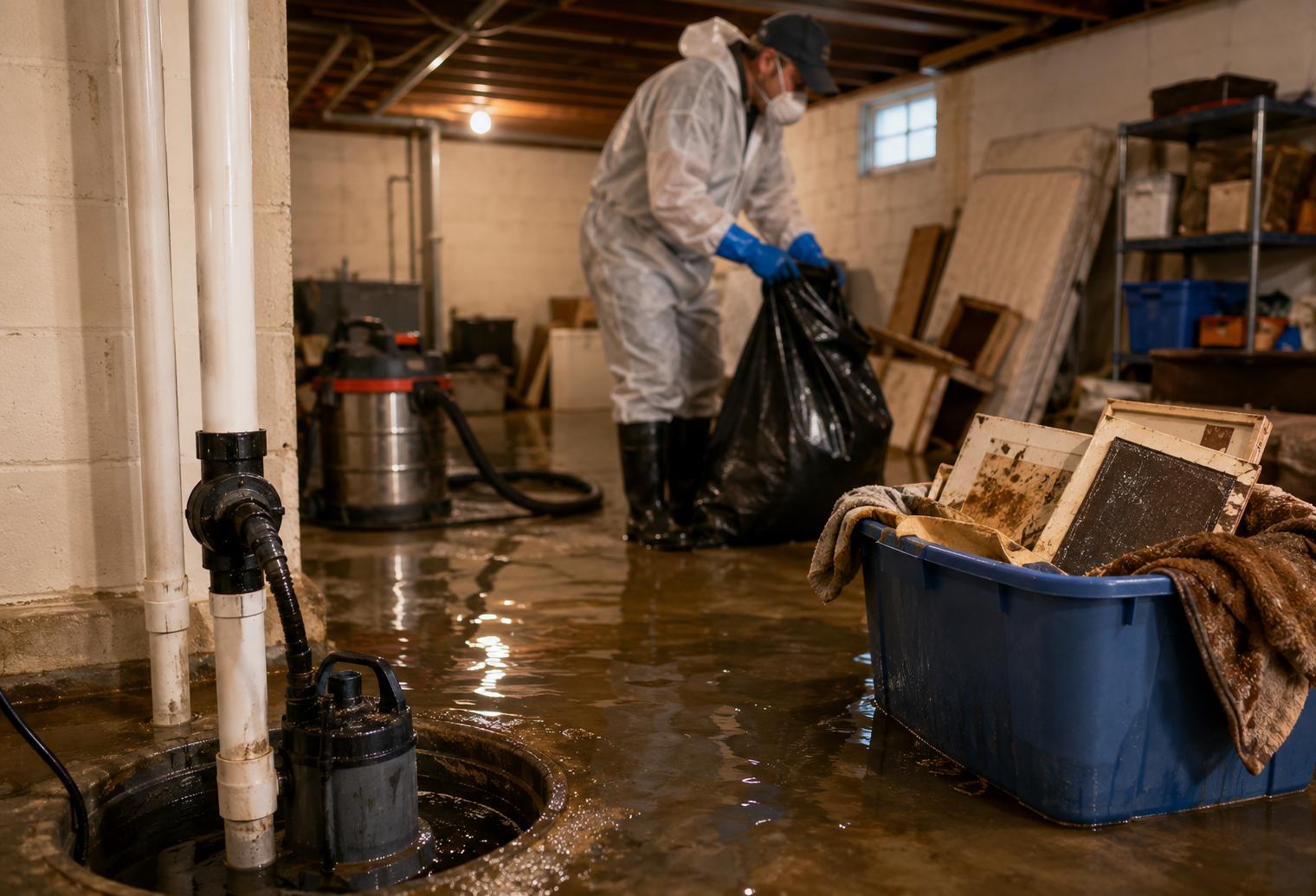
Heavy rain, spring snowmelt, and sudden storms can put sump pumps to the test across Central New York. When a sump pump fails, even for a few hours, basements can quickly fill with water, leaving homeowners in Port Byron and surrounding communities dealing with damaged belongings, lingering moisture, and potential health hazards.

Quick Answer

A sump pump failure can leave behind water-damaged furniture, boxes, carpeting, and household items that may become unsafe if left in place. Safe removal involves identifying salvageable belongings, separating contaminated materials, wearing proper protective equipment, and removing water-damaged clutter promptly to reduce the risk of mold growth and additional property damage. Professional clutter removal services can help make the cleanup process safer and more efficient.

What Local Readers Should Know

Why This Matters Locally

Safe handling of water-damaged basement clutter is especially important for homeowners in Port Byron because Central New York experiences seasonal weather patterns that place extra demands on sump pump systems. Spring snowmelt, extended rainy periods, and summer thunderstorms can all overwhelm drainage systems.

Communities such as Auburn, Weedsport, Elbridge, Jordan, Seneca Falls, and Montezuma share similar weather conditions and many homes feature basements used for storage. Older foundations throughout Cayuga County and neighboring Onondaga County may also experience groundwater intrusion during wet seasons, making fast cleanup essential after flooding.

At Expert Clutter Removal Service, we understand that removing damaged belongings is often one of the most stressful parts of recovering from a flooded basement. Our goal is to help homeowners clear affected spaces safely so restoration work can move forward.

Local Data and Field Observations

According to the National Weather Service, Central New York regularly experiences periods of heavy rainfall, spring runoff, and severe thunderstorms that increase the risk of basement flooding. Local emergency management agencies also encourage homeowners to maintain sump pumps before wet weather arrives.

From our field observations, many flooded basements contain stored household goods that have accumulated over many years. Cardboard boxes, fabric furniture, old clothing, paper records, and unfinished wood furniture are among the items most frequently damaged beyond recovery after a sump pump failure.

Local Impact

A flooded basement affects more than stored belongings. Homeowners often lose valuable storage space, delay renovation projects, and face increased restoration costs if damaged materials remain inside too long.

Water-damaged clutter also makes it difficult for drying equipment to reach walls and flooring. Removing saturated items quickly gives restoration professionals better access to inspect structural damage and begin moisture mitigation.

Warning Signs After a Sump Pump Failure

Recognizing problems early can help reduce long-term damage.

When to Call a Professional

Professional help is recommended whenever floodwater has damaged large amounts of stored property or when contamination may be present.

Homeowners can safely remove small amounts of clean water and inspect belongings if conditions are safe. However, professional assistance becomes important when:

Common Local Causes of Sump Pump Failures

1. Power Outages During Storms

Thunderstorms across Central New York frequently interrupt electrical service right when sump pumps are needed most.

2. Heavy Groundwater

Extended rain and snowmelt can produce more groundwater than some older sump pump systems can handle.

3. Mechanical Failure

Motors eventually wear out, especially in pumps that operate frequently throughout wet seasons.

4. Float Switch Problems

Debris or improper positioning can prevent the float from activating the pump.

5. Lack of Maintenance

Many homeowners do not discover sump pump problems until flooding has already occurred.

Prevention and Maintenance

Preventing basement flooding starts with routine inspections.

Helpful maintenance includes:

While homeowners can perform basic maintenance, electrical repairs and pump replacement should be handled by qualified professionals.

Expected Results

Prompt removal of water-damaged clutter helps speed the overall recovery process.

After damaged belongings have been removed, restoration professionals can:

Although every flooding event is different, early cleanup generally leads to faster restoration.

Common Mistakes

Waiting Too Long

Consequence: Mold and odors become more difficult to eliminate.

Better Approach: Begin removing damaged clutter as soon as conditions are safe.

Saving Unsalvageable Items

Consequence: Wet materials continue trapping moisture inside the basement.

Better Approach: Separate salvageable items from materials that cannot be restored.

Ignoring Safety Equipment

Consequence: Exposure to contaminated water, mold, and sharp debris.

Better Approach: Wear gloves, waterproof boots, and appropriate protective equipment.

Blocking Restoration Work

Consequence: Drying equipment cannot reach affected surfaces.

Better Approach: Remove damaged belongings promptly to improve access.

Common Local Scenario

A homeowner in the Port Byron area returns from a weekend away after several days of heavy rain. A failed sump pump has left several inches of water throughout the basement. Stored holiday decorations, old furniture, family keepsakes, and dozens of cardboard boxes are soaked. Before drying equipment can be installed, the damaged clutter must be sorted, removed, and disposed of safely so restoration can begin.

Related Service Solutions

Water-damaged basement cleanup often involves more than simply hauling away trash.

Related services may include:

Schedule a basement clutter removal consultation

Comparing Your Options

Option Advantages Limitations
DIY Removal Lower immediate cost for small cleanups Time consuming, physically demanding, and may involve safety risks
Professional Clutter Removal Faster cleanup, safe handling of heavy items, efficient disposal Service cost varies depending on volume
Delaying Cleanup No immediate effort required Higher risk of mold growth, odors, and additional damage

Service Areas

We proudly assist homeowners in Port Byron along with nearby communities including Auburn, Weedsport, Seneca Falls, Jordan, Elbridge, and surrounding areas throughout Cayuga County and Central New York.

Cost of Ignoring the Issue

Waiting to remove water-damaged clutter often leads to higher restoration costs. Wet furniture, carpeting, drywall, and stored belongings continue retaining moisture, increasing the chance of mold growth and making the cleanup process more complicated. Acting quickly can help limit additional property damage and improve the efficiency of restoration efforts.

Protect your basement and clear damaged clutter today

Frequently Asked Questions

How quickly should water-damaged basement clutter be removed in Port Byron?

The safest approach is to begin removing damaged materials as soon as conditions are safe. Prompt cleanup helps reduce moisture, limits mold growth, and allows restoration work to begin sooner.

Can flood-damaged furniture be saved?

Some furniture can be restored if exposed only to clean water for a short period. Upholstered and particleboard furniture is often difficult to salvage after prolonged saturation.

Is basement floodwater always contaminated in Central New York?

Not always. Clean groundwater differs from sewer backup or stormwater contamination. If the water source is uncertain, it is safest to treat affected materials with caution and use appropriate protective equipment.

What items should never remain in a flooded basement?

Water-soaked cardboard, wet carpeting, saturated insulation, moldy furniture, and heavily damaged fabrics should generally be removed promptly to reduce moisture and health risks.

Why are sump pump failures common during spring in Cayuga County?

Spring snowmelt combined with seasonal rainfall increases groundwater levels, placing additional demand on sump pump systems throughout the region.

Should I remove clutter before restoration contractors arrive?

Yes. Removing damaged belongings provides restoration crews with better access to affected flooring, walls, and structural areas, helping them begin drying and repairs more efficiently.

Can mold begin growing after a sump pump failure?

Yes. Mold may begin developing within 24 to 48 hours when moisture remains trapped in porous materials under favorable conditions.

Do you provide clutter removal throughout Central New York?

We assist homeowners in Port Byron and surrounding Central New York communities by removing water-damaged clutter and preparing spaces for restoration work.

Closing

Recovering from a sump pump failure can feel overwhelming, especially when years of stored belongings have been damaged. Removing water-damaged clutter safely and quickly helps reduce additional property damage while creating a cleaner, safer space for restoration. Local homeowners throughout Central New York benefit from acting promptly after basement flooding to protect both their property and their health.

Clear Your Flood-Damaged Basement with Confidence

We’re here to help make the cleanup process safer, faster, and less stressful after a sump pump failure.

Contact us today

Clearing the Way: Newark, NY Commercial and Municipal Debris Hauling

When a business, construction crew, or municipal department needs to reclaim space and restore order, the process starts with one critical step: getting rid of the debris. In Newark, NY, commercial clutter removal has become an increasingly essential service as the area continues to grow, renovate, and modernize. Whether it is a decades-old office being cleared out to make room for new tenants or a construction site generating mountains of scrap and rubble, professional hauling services keep operations moving forward without unnecessary delays.

Newark sits in the heart of Wayne County, a region known for its agricultural roots, small-town character, and growing commercial presence. As local businesses expand and municipal projects increase in scope, the demand for reliable industrial hauling and debris management has never been more relevant. This blog explores why commercial and municipal debris hauling matters, what kinds of jobs these services handle, and how Newark and the broader Wayne County area benefit from professional removal solutions.

What Commercial Clutter Removal Actually Involves

Many property owners and business managers underestimate how complex commercial clutter removal can be until they are standing in the middle of it. Unlike a simple residential cleanout, commercial spaces present unique challenges. There are often multiple layers of accumulated materials, including outdated furniture, broken equipment, discarded shelving, piles of paperwork, and general waste that has built up over years of operation.

Office cleanout services in Newark, NY address exactly these kinds of situations. When a company downsizes, relocates, or simply undergoes a deep refresh, the volume of material that needs to be removed can be staggering. A typical office cleanout might involve removing cubicle systems, obsolete electronics, filing cabinets full of old records, carpeting, ceiling tiles, and everything in between. Without a professional hauling team, this process becomes a logistical nightmare that pulls staff away from their actual responsibilities.

Commercial clutter removal goes beyond just tossing things in a dumpster. A reputable hauling service in the Newark area will assess the scope of the job, bring appropriately sized vehicles and containers, sort materials for proper disposal or recycling, and complete the work efficiently so that the business can move on. Time is money, and a professional crew understands that.

Industrial Hauling in Wayne County: More Than Just Trash

Industrial hauling in Wayne County covers a broad and demanding range of services. Factories, warehouses, manufacturing plants, and agricultural operations all generate waste and surplus materials that cannot simply be set at the curb. These materials require specialized handling, appropriate transportation, and proper disposal protocols that align with local and state regulations.

In a county like Wayne, where industry and agriculture intersect, hauling services often deal with everything from scrap metal and broken machinery to chemical containers, pallets, and bulk organic waste. The sheer weight and volume of industrial materials means that ordinary removal methods are not sufficient. Hauling companies equipped for industrial work bring heavy-duty trucks, trained operators, and the experience needed to safely remove materials from tight loading docks, large warehouse floors, or sprawling outdoor storage areas.

What sets professional industrial hauling apart is accountability. When a Wayne County business hires a licensed hauling service, they are not just paying for labor and a truck. They are paying for assurance that their materials will be handled in compliance with disposal laws, that their property will not be damaged during removal, and that the job will be completed on a defined timeline. That level of professionalism protects businesses from liability and keeps their operations running smoothly.

Construction Site Debris Removal: Keeping Newark Projects on Schedule

Few things slow down a construction project quite like debris accumulation. Lumber scraps, drywall chunks, concrete rubble, metal scraps, packaging materials, and old fixtures can pile up fast on an active job site. When debris is not removed promptly, it creates safety hazards, reduces working space, and can put a project behind schedule. Construction site debris removal is not just about cleanliness; it is about maintaining a functional and safe work environment.

In Newark, NY, construction activity ranges from small commercial renovations to larger municipal infrastructure projects. Each of these jobs produces waste that needs to go somewhere, and that somewhere is not a pile in the corner of the lot. Professional construction debris removal services coordinate with contractors and project managers to schedule timely pickups that keep the site clear without interrupting the flow of work.

A good debris removal team understands the materials involved. Concrete and masonry waste, for example, requires different handling than wood or drywall. Hazardous materials like asbestos-containing insulation or lead-based paint demand specialized removal protocols entirely. Hauling companies with construction experience bring the knowledge to sort, handle, and dispose of each material type correctly, keeping the project in compliance with environmental and safety regulations.

For contractors working in and around Newark, partnering with a reliable debris removal company is a smart investment. It reduces the risk of fines, keeps the site inspection-ready, and allows skilled workers to focus on building rather than cleanup.

Municipal Debris Hauling: Supporting Newark and Wayne County Communities

Beyond private businesses and construction crews, municipalities themselves are major consumers of debris hauling services. City and county governments regularly undertake projects that generate significant amounts of material requiring removal. Road maintenance, park renovations, public building cleanouts, storm cleanup, and infrastructure upgrades all produce debris that must be managed responsibly.

Municipal debris hauling in the Newark and Wayne County area plays a vital role in keeping public spaces clean, safe, and functional. After a severe storm, for instance, fallen trees, broken fencing, scattered debris, and damaged infrastructure materials can create widespread hazards. A coordinated hauling response allows the municipality to restore normalcy quickly and minimize disruption to residents and businesses.

Public buildings such as old municipal offices, community centers, or maintenance facilities often require full cleanouts when they are being repurposed or decommissioned. Office cleanout services adapted to municipal scale can handle everything from surplus furniture and outdated equipment to archived documents and structural materials left over from renovation work.

There is also the matter of public perception. When a town like Newark invests in proper debris management, it signals a commitment to the quality of life in the community. Well-maintained streets, parks, and public facilities reflect positively on local government and contribute to the overall appeal of the area for residents and businesses alike.

Working with a hauling company that has municipal experience means working with a team that understands the bidding process, documentation requirements, and operational standards that public-sector contracts demand. It is a different kind of relationship than a one-off commercial job, requiring ongoing communication, flexibility, and a proven track record of reliability.

Conclusion

Newark, NY and the surrounding Wayne County region have a growing need for dependable commercial and municipal debris hauling services. From office cleanout services that restore workable spaces to construction site debris removal that keeps projects on schedule, professional hauling is the backbone of countless operations across the area. Industrial hauling in Wayne County addresses the heavy-duty demands of manufacturers and large facilities, while municipal debris management supports the public infrastructure that communities rely on every day.

Choosing the right hauling partner means choosing a team with the equipment, experience, and local knowledge to get the job done right. For businesses and municipalities in Newark looking to clear the way for what comes next, professional debris hauling is not just a convenience; it is a necessity.

Need Hauling Services Near You?

At Expert Clutter Removal Service, we’ve been proudly serving Port Byron and the surrounding areas since 1994, delivering top-quality clean-out and hauling solutions with the personal touch only a local, family-owned business can provide. Whether you need to clear out your home, office, industrial site, or municipal space, our hardworking team is ready to tackle everything from old furniture and appliances to yard brush, carpet, and construction debris, quickly, efficiently, and with care. We’re your one-stop shop for all hauling needs, so give us a call today and let us help you reclaim your space!

Helping a Loved One With Hoarding: When to Call a Professional Clean-Out Team

Hoarding is more than just accumulating clutter. For those living with hoarding disorder, it’s a deeply rooted psychological struggle that affects their ability to discard items, regardless of their value. This condition can create unsafe living conditions and severely strain relationships with loved ones. For family members or friends witnessing someone close suffer from this condition, the experience can be overwhelming, confusing, and emotionally exhausting.

People with hoarding tendencies often isolate themselves, partly due to shame and fear of judgment. Their living spaces may become hazardous, blocked by stacks of possessions, and even uninhabitable. It’s not uncommon for basic utilities to stop functioning or for pests to infiltrate the space. In these instances, the need for help with hoarding cleanup becomes critical, not just for the person’s health but also for their safety.

Understanding the emotional weight of hoarding is essential. Individuals are not simply refusing to clean; they are battling an internal emotional storm. Approaching the situation with empathy, patience, and a clear plan can open the door to progress. It’s also vital to recognize that recovery from hoarding is a process, not a quick fix.

Signs It’s Time to Involve Professionals

Determining when to intervene with a professional hoarder cleanout, especially in sensitive cases, requires careful observation and awareness. Some key signs can indicate that the situation has escalated beyond what a family or support system can handle on their own. One of the most obvious indicators is when the living conditions become a health or safety hazard. This could include blocked exits, excessive mold, infestations, or non-functional bathrooms and kitchens.

When the hoarding behavior causes significant emotional distress to the individual or those around them, it may be time to consider bringing in a team trained in hoarding disorder cleanup support. This is particularly relevant in cases where repeated attempts to clean or declutter the space have failed, or where the hoarder becomes angry, fearful, or overwhelmed by the mere idea of discarding items.

There is also a risk of legal consequences or eviction, especially in rented homes or apartments. If code violations or neighbor complaints arise, the pressure to resolve the issue quickly increases. In these moments, engaging professionals who understand the nuances of the disorder and can offer compassionate hoarder clean-up is not only wise but necessary.

Additionally, when hoarding is accompanied by other mental health conditions such as anxiety, depression, or trauma, the situation may be more complex than it appears. Professional hoarder cleanout services in NY and other areas are often equipped to work alongside mental health professionals, creating a coordinated plan that prioritizes both the emotional well-being of the person and the physical restoration of their space.

The Role of Compassionate Clean-Out Services

Compassion is a cornerstone of successful hoarding intervention. Simply clearing away belongings is rarely effective in the long term and can cause emotional harm if not handled correctly. That’s why compassionate hoarder clean-up services approach each case with sensitivity, dignity, and a deep understanding of the psychological factors at play.

These teams often include individuals trained to recognize and respond to signs of trauma and mental health distress. They don’t just remove clutter; they work to build trust with the person affected. This may involve establishing a sense of control by letting the individual participate in the decision-making process, even if on a limited scale. Doing so helps them feel respected rather than violated, which is vital for building cooperation.

In regions like Port Byron, hoarder junk removal services have evolved to incorporate psychological insight into their work. They understand that behind each pile of belongings lies a story: memories, loss, fear, or a sense of security tied to objects. Respecting this emotional landscape while helping restore the home to a functional and safe state sets truly compassionate services apart.

The presence of a professional team also takes the pressure off family members who may have been struggling with how to help their loved one. This reduces friction within relationships and allows loved ones to support emotionally rather than take on the heavy burden of physical cleanup.

Choosing the Right Hoarding Cleanup Team

Selecting the right team for help with hoarding cleanup is a critical step. Not all cleaning services are prepared to handle the sensitive nature of hoarding disorder, which requires more than just strong organizational skills. Look for providers who specialize in hoarder junk removal, particularly those in your local area such as Port Byron, and who advertise their experience in dealing with mental health-sensitive cases.

Professional hoarder cleanout companies in NY often provide initial consultations to assess the severity of the situation. This can help families understand what the process will entail, how long it might take, and what kind of emotional support the team can provide throughout. Transparency in communication is crucial, as is a clear and humane methodology for sorting, discarding, and sanitizing the home.

It’s also worth asking whether the service includes follow-up support. The aftermath of a clean-out can trigger anxiety or grief in individuals with hoarding disorder. Some companies offer resources or referrals to therapists and support groups, recognizing that true recovery requires ongoing care beyond just cleaning the physical space.

Choosing a team that collaborates with both the person affected and any involved mental health professionals ensures a holistic approach. It also fosters a sense of continuity, which can be reassuring in an otherwise turbulent time.

Building a Path Toward Recovery

Recovery from hoarding disorder is possible, but it is rarely linear. After a professional clean-out, there is a need to establish sustainable habits and coping strategies to prevent a return to old patterns. Families and caregivers can play a pivotal role by offering continued encouragement and helping connect their loved ones with resources that support mental wellness.

Ongoing therapy, particularly cognitive behavioral therapy (CBT), has proven effective in helping individuals understand their behavior, reframe their thoughts about possessions, and develop healthier decision-making processes. Some may also benefit from medication, especially if their hoarding is linked to conditions like OCD or depression.

Creating a safe environment free of judgment is one of the most supportive things a family can offer. Encouraging open communication about struggles and setbacks helps remove the shame that often perpetuates hoarding behaviors.

Professional teams that offer hoarding disorder cleanup support may also provide education to families, helping them understand the psychological elements of the disorder and how best to maintain progress. In some cases, regular check-ins or light maintenance visits can be arranged to support the individual’s new routines.

The journey may include relapses, and that’s okay. What matters is that there is a compassionate system in place ready to support recovery without criticism or ultimatums.

Conclusion

Helping a loved one with hoarding is a challenge that requires patience, empathy, and the right kind of support. When living conditions become unsafe or emotionally harmful, turning to a professional hoarder cleanout service in NY or in local areas like Port Byron is not a sign of failure; it’s a powerful step toward healing. These teams bring more than just cleaning supplies; they bring experience, understanding, and a commitment to restoring dignity and safety.

Hoarding is a complex disorder that touches every part of a person’s life. By calling on experts who offer help with hoarding cleanup, families can ensure that their loved one gets the specialized care they need. The process may be slow, but with compassionate hoarder clean-up services, real change is possible. The goal is not perfection but progress, and with the right help, recovery can begin one cleared space at a time.

Need Hauling Services Near You?

At Expert Clutter Removal Service, we’ve been proudly serving Port Byron and the surrounding areas since 1994, delivering top-quality clean-out and hauling solutions with the personal touch only a local, family-owned business can provide. Whether you need to clear out your home, office, industrial site, or municipal space, our hardworking team is ready to tackle everything from old furniture and appliances to yard brush, carpet, and construction debris, quickly, efficiently, and with care. We’re your one-stop shop for all hauling needs, so give us a call today and let us help you reclaim your space!